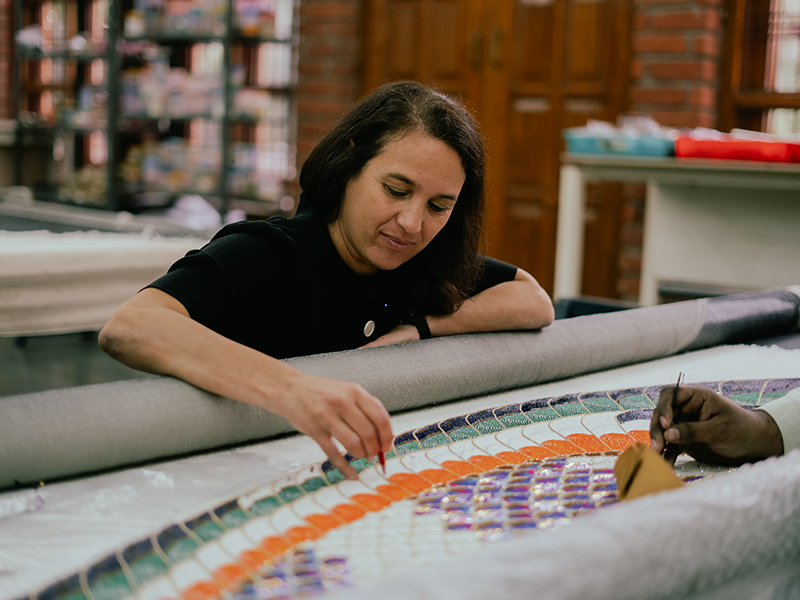
Embroidering dignity, from India to Paris
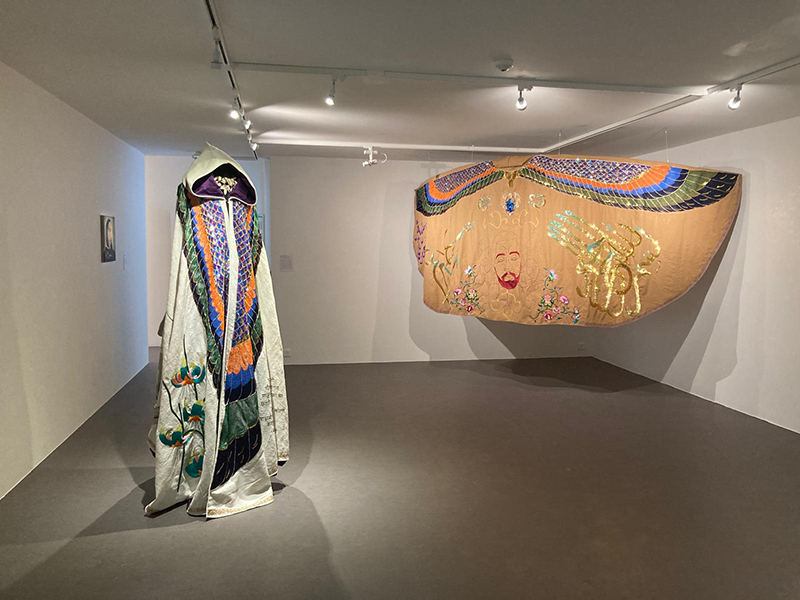
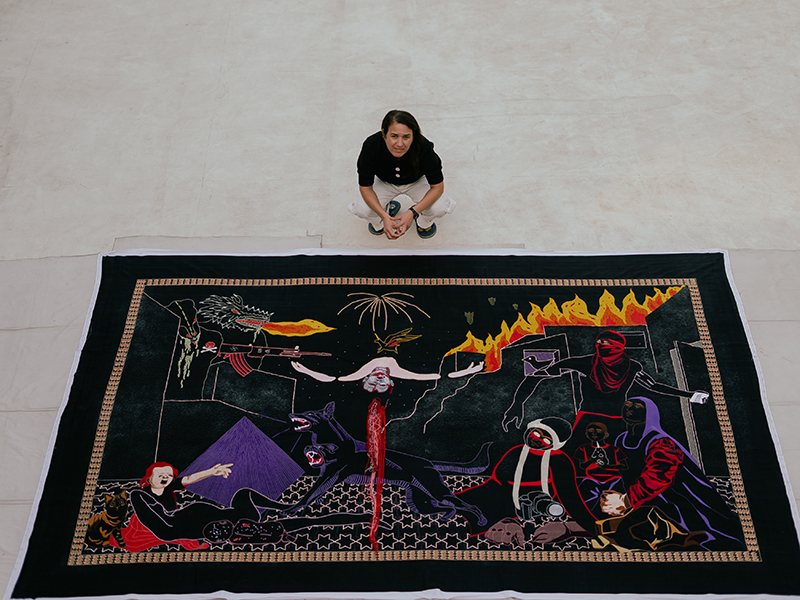
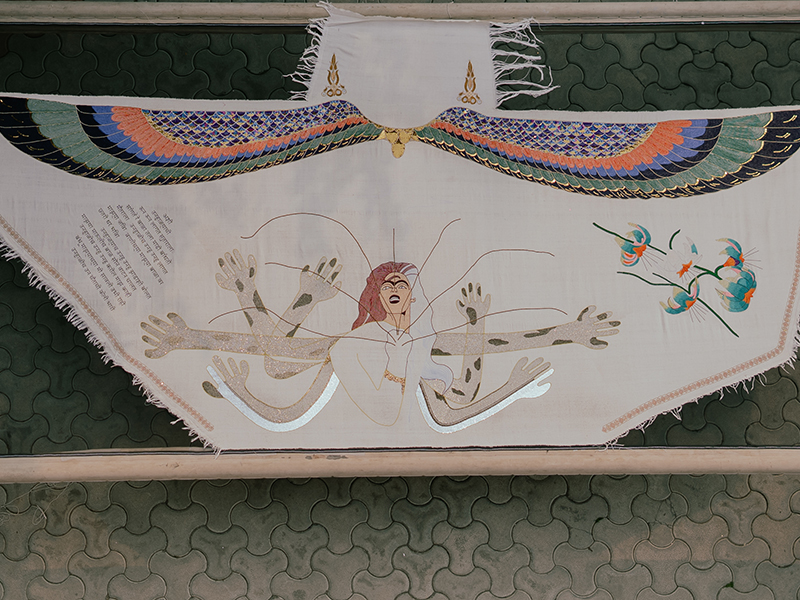
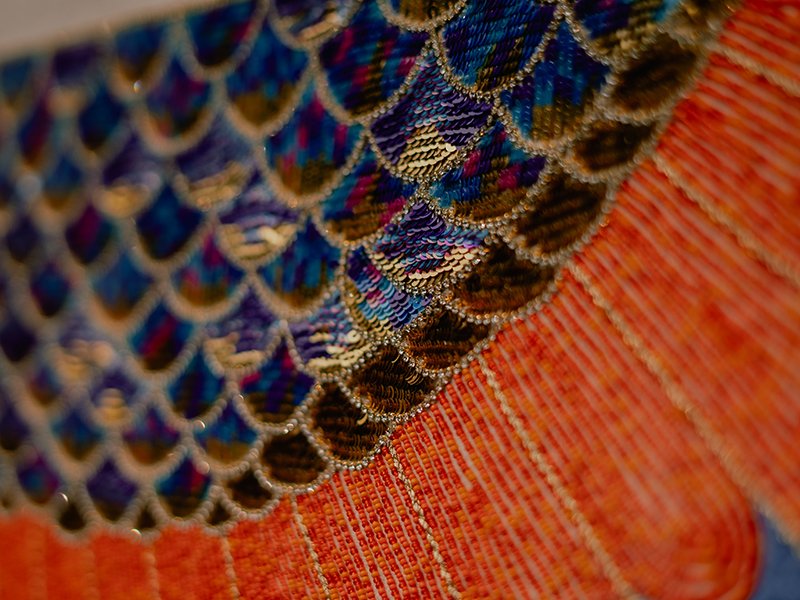
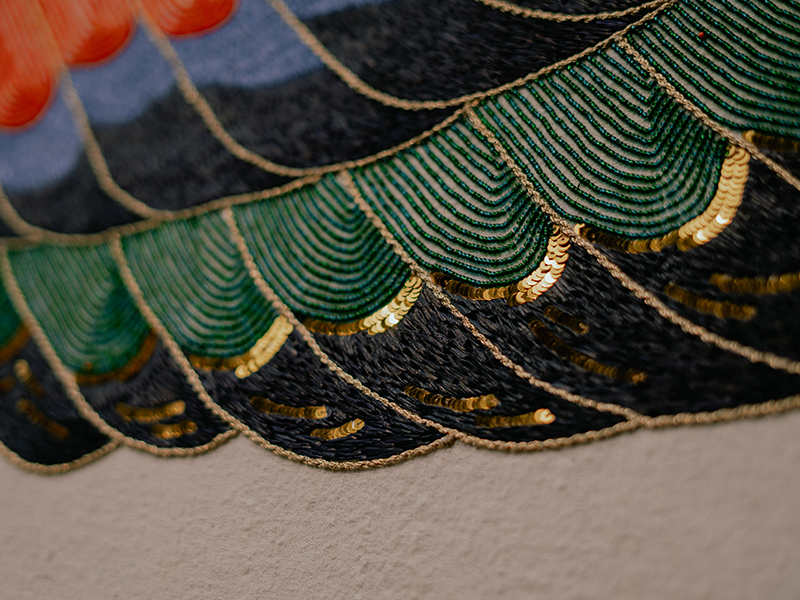
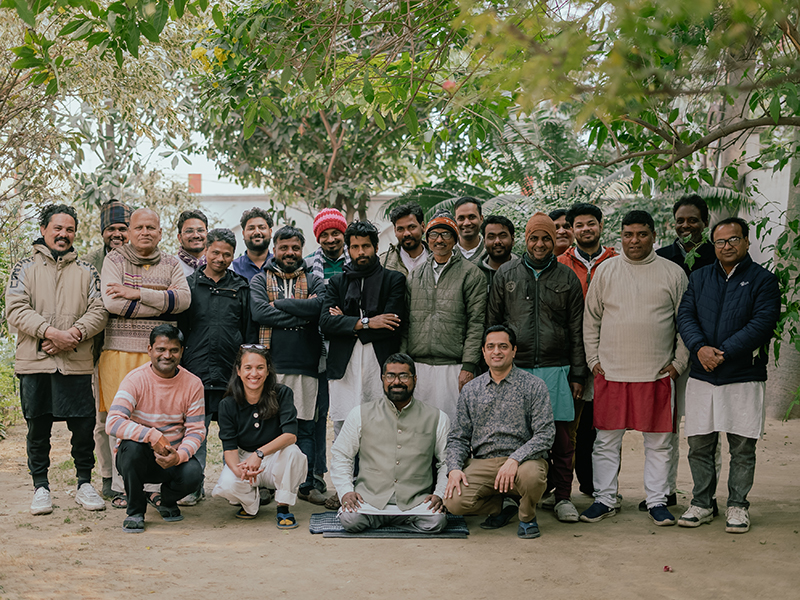
During her Villa Swagatam residency at the Kalhath Institute in Lucknow, artist Dalila Dalléas Bouzar developed a new body of work at the intersection of textile, memory, and political representation. Working in close dialogue with the embroiderers at Kalhath, she created a series of embroidered burnous, a traditional Maghrebi garment long associated with dignity, social status, and transmission.
Rooted in Algerian heritage yet shaped through collaboration with Indian embroiderers, these works unfold as layered objects: at once garments, symbols, and narratives. Through the act of embroidery, patient, collective, and deeply situated, the burnous becomes a space of encounter between practices, geographies, and histories.
The resulting works are now presented in the exhibition Prolongations at the Institut des Cultures d’Islam in Paris (on view until 2 August 2026). Curated around the cultural and social imaginaries of football, the exhibition explores the place of young men from immigrant backgrounds within French society.
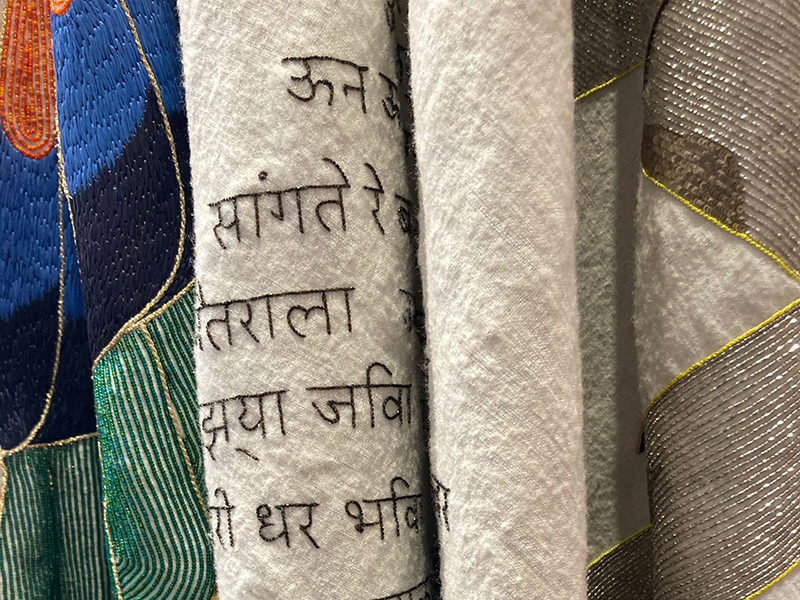
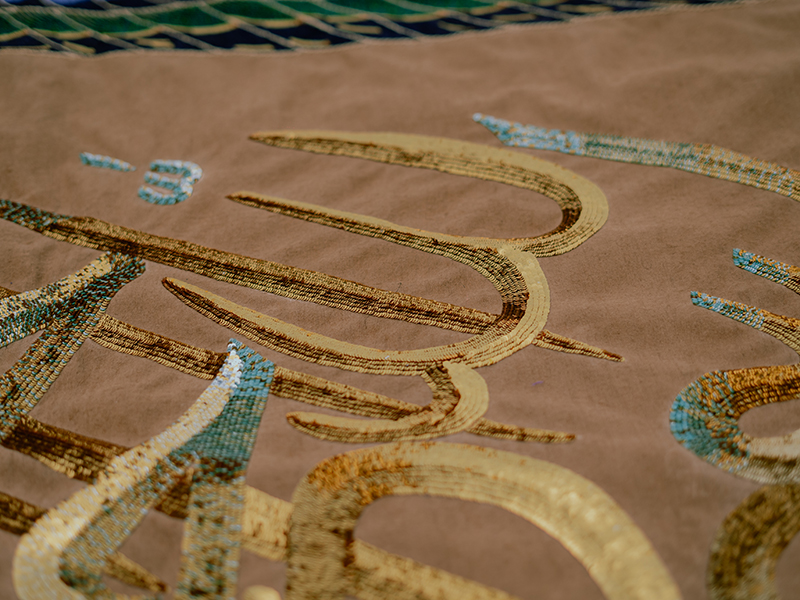
Rather than approaching football directly, Dalila enters the exhibition through a reflection on the racialised body, how it is seen, instrumentalised, and often reduced to performance. In response, her embroidered burnous seek to reclaim these bodies, restoring their complexity, their symbolic charge, and their dignity. Developed in India, the works draw from a wide constellation of visual and spiritual references: Egyptian iconography, Byzantine motifs, Islamic calligraphy, and Indian textile traditions. They also incorporate fragments of songs traditionally sung by Indian women artisans, embedding within the fabric voices that are often marginalised or unheard. Through this layering, the burnous becomes both a protective mantle and a site of resistance, a form that carries memory across contexts and geographies.
“The series I am presenting is titled “Rester Barbare”, after Kateb Yacine, and it reclaims the stigma of ‘barbarity’ and turns it into a form of strength and self-definition. By presenting figures like Djamila Bouhired, I try to portray how laughter itself becomes an act of resistance.”
- Dalila Dalléas Bouzar
Two figures inhabit these pieces: the contemporary and the historical, the popular and the political, reflecting the artist’s ongoing engagement with individual and collective memory, and her commitment to reconfiguring dominant narratives.
Alongside this presentation in Paris, Dalila Dalléas Bouzar will also participate in Le Nouveau Printemps in Toulouse (29 May – 28 June 2026), further extending the trajectory of a residency that has unfolded across multiple contexts and collaborations.